Featured
Table of Contents
That maximizes money in the short term, and you might have three to four years to conserve towards the negotiation quantity. Very dangerous to credit history, largely as a result of missed out on repayments and an adverse "settled" mark that might remain on your credit record for approximately seven yearsMay be just choice if other choices (debt loan consolidation, equilibrium transfer bank card, financial obligation mercy) aren't possibleTypically requires a charge to the 3rd party, which could balance out some or every one of the financial savings from financial debt settlementMay help you stay clear of bankruptcy if you've missed out on several paymentsNot all lenders function with debt negotiation firms Financial obligation forgiveness might be right for you if you are experiencing a monetary hardship that makes it almost impossible to pay for your debt equilibriums.
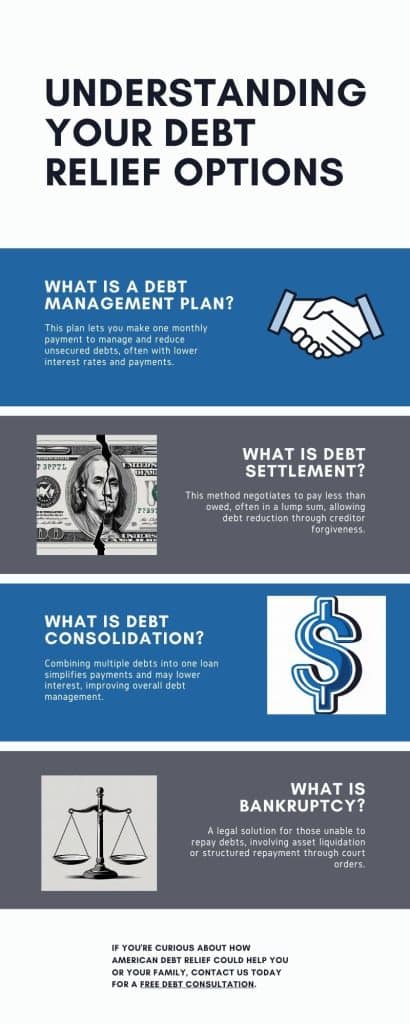
With a DMP, you make one month-to-month repayment to the credit score therapy firm. Those funds are then distributed to financial institutions of your unsafe debts, such as charge card and installment finances. The company collaborates with your creditors to lower rates of interest or waive costs, yet some lenders may refuse such concessions.
It can assist you pay down financial obligation if you're able to secure a car loan price that's lower than the ordinary price of the accounts you're consolidating. You should refrain from racking up financial debt on those freshly gotten rid of accounts or your financial obligation can expand also higher.
That gives you plenty of time to eliminate or considerably minimize your balance while making interest-free payments.
Ongoing Assistance and Peer Support for Dummies
You may need it if your lender or a debt collector ever attempts to collect on the debt in the future. The letter might show you do not owe what the debt collection agency's records show. Yes, in many cases, the internal revenue service takes into consideration forgiven debt as gross income. When a loan provider forgives $600 or more, they are needed to send you Form 1099-C.
Financial obligation forgiveness or settlement usually harms your credit rating. Anytime you work out a financial obligation for much less than you owe, it might look like "worked out" on your credit scores report and influence your credit history for seven years from the day of settlement. Your debt can additionally go down considerably in the months bring about the mercy if you fall behind on repayments.
What Does Initial Effects of Job Loss and Debt: Building a 90-Day Survival Plan with a Counselor Decisions Mean?
This situation commonly results from underreporting income, not submitting returns on time, or disparities located throughout an IRS audit. The consequences of gathering tax obligation financial debt are severe and can include tax liens, which provide the Internal revenue service a legal insurance claim to your building as security for the financial obligation.
Salaries and Financial institution Accounts IRS can impose (take) incomes and financial institution accounts to satisfy the financial debt. Residential or commercial property Seizure In severe cases, the Internal revenue service can take and offer residential or commercial property to cover the financial debt.
Clinical depression, anxiousness, and other psychological health issues. Social Stigma Encountering lawsuit from the IRS can bring social stigma. Damages to track record and connections. Employment Opportunities An inadequate credit report because of tax financial debt can limit employment possibility. Problem finding or maintaining a work. Government Benefits Tax financial obligation might impact qualification for government benefits, such as Social Safety and Medicaid.
The 7-Minute Rule for Post-Forgiveness Help Including Group Resources
The OIC thinks about several variables, including the taxpayer's earnings, expenses, asset equity, and ability to pay. Efficiently working out an OIC can be complicated, needing an extensive understanding of the IRS's standards and a solid debate for why your offer aligns with your capacity to pay. It is very important to keep in mind that not all applications are approved, and the procedure needs detailed economic disclosure.
The internal revenue service evaluates your overall financial scenario, including your income, expenses, possession equity, and capability to pay. You should also be existing with all declaring and repayment demands and not remain in an open personal bankruptcy proceeding. The internal revenue service also considers your conformity background, reviewing whether you have a record of prompt declaring and paying taxes in previous years.
Fascination About Why Avoiding to Get Job Loss and Debt: Building a 90-Day Survival Plan with a Counselor May Cost You
The application process for a Deal in Concession involves a number of detailed actions. First, you must finish and send internal revenue service Form 656, the Deal in Compromise application, and Form 433-A (OIC), a collection details declaration for people. These types need extensive financial details, including information concerning your earnings, financial obligations, expenditures, and possessions.
Back taxes, which are unsettled taxes from previous years, can considerably increase your complete IRS financial debt if not addressed quickly. This financial debt can accumulate interest and late repayment charges, making the initial quantity owed a lot bigger over time. Failing to repay tax obligations can lead to the internal revenue service taking enforcement actions, such as releasing a tax lien or levy versus your residential or commercial property.
It is necessary to resolve back tax obligations immediately, either by paying the total owed or by arranging a layaway plan with the IRS. By taking aggressive steps, you can prevent the buildup of extra rate of interest and charges, and avoid a lot more aggressive collection actions by the internal revenue service.
One common factor is the belief that the taxpayer can pay the total either as a lump amount or through a layaway plan. The IRS also takes into consideration the taxpayer's revenue, expenditures, possession equity, and future earning capacity. If these elements show that the taxpayer can afford to pay greater than the used amount, the IRS is likely to reject the deal.
Chapter 7 Essentials and Eligibility - The Facts
It is important to give precise and complete info in your application and to consult with a tax obligation professional to enhance the opportunities of approval. Dealing with internal revenue service debt can be complex and difficult. Tax obligation experts, such as CPAs, tax obligation lawyers, or enrolled representatives, can provide very useful assistance. They have the experience to browse the intricacies of tax obligation legislation and IRS treatments.

Table of Contents
Latest Posts
9 Easy Facts About How to Get Started Today Shown
The Definitive Guide to Your Introduction to How Strategic Goal Setting Can Transform Your Debt Elimination Journey : APFSC with APFSC
All about Actionable Guidance to Rebuild Your Life
More
Latest Posts
9 Easy Facts About How to Get Started Today Shown
All about Actionable Guidance to Rebuild Your Life